0
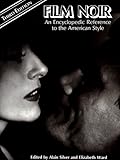
Film Noir: An Encyclopedic Reference to the American Style
Posted by Notcot on May 21, 2010 in Noir
Gizmos, Gadgets, Noir and Steampunk

London, March 1992. Nearly a year after the release of Brit noir sensation, Bent, the capital is still in the grip of its cultural and stylistic impact. Diana Kemp, journalist on the alternative arts magazine Lux, is dismissive of the film’s cult fol
Price : £ 7.99

A hilarious and affectionate romp through the strange world of sci-fi, cult TV and film conventions from Doctor Who to Star Wars via the weird world of The Prisoner!
Price : £ 10.39
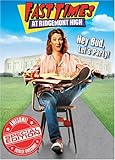
Amazon.co.uk Review
The script for Fast Times at Ridgemont High is based on filmmaker Cameron (Jerry Maguire, Almost Famous) Crowe’s time as a reporter for Rolling Stone. He was so youthful looking that he was able to go undercover for a year at a California high school and write a book about it. The film launched the careers of several young actors, including Jennifer Jason Leigh, Judge Reinhold, Phoebe Cates and, above all, Sean Penn. The story line is episodic, dealing with the lives of iconic teen types: one of the school’s cool kids, a nerd, a teen queen and, most enjoyably, the class stoner (Penn), who finds himself at odds with a strict history teacher (a wonderfully spiky Ray Walston). This is not a great film but very entertaining and, for a certain age group, a seminal film experience.–Marshall Fine, Amazon.com
On the DVD: Amy (Clueless) Heckerling and Cameron Crowe’s commentary is revealing and indicative of a time where nudity on celluloid was shocking rather than the norm as they talk about the issues which contributed to the film’s original X-rating, as well as all the actors who originally auditioned for the roles. The transfer quality is high with little grain, and although the soundtrack is in mono rather than Dolby 5.1 it is not detrimental to the film. There’s a retrospective documentary called “Reliving Our Fast Times at Ridgemont High” featuring new interviews with most of the cast and crew, plus a highly original feature about the locations used in the film, how they looked in 1982 and how they look now. For fact buffs there’s the usual mix of biographies, theatrical trailer and production notes.–Kristen Bowditch

* Published for the first time in the UK * Includes an exclusive new letter from Bruce to his ever-growing legion of UK fans * Bruce is the cult star of buddy Sam Raimi’s Evil Dead trilogy * He’s starred and cameo-ed in countless cult film and TV hit
Price : £ 9.69

Amazon.co.uk Review
The first and only film shot entirely in subtitled Latin, Sebastiane is Derek Jarman’s first work as a director (though he shared the job with the less well-known Paul Humfress) and is a strange combination of gay nudie movie, pocket-sized Ancient Roman epic and meditation upon the image of Saint Sebastian. It opens with the Lindsay Kemp dance troupe romping around with huge fake phalluses to represent the Ken Russell-style decadence of the court of the Emperor Diocletian in AD 303, then decamps to Tuscany as Diocletian’s favourite guard Sebastian (Leonardo Treviglio) is demoted to ordinary soldier and dispatched to a backwater barracks because the Emperor (Robert Medley) suspects him of being a covert Christian. The bulk of the film consists of athletic youths in minimal thongs romping around the countryside, soaking themselves down between bouts of manly horseplay or sylvan frolic. It all comes to a bad end as the lecherous but guilt-ridden commanding officer Severus (Barney James) fails to cop off with Sebastian and instead visits floggings and tortures upon his naked torso, finally ordering his men to riddle the future saint with arrows, thus securing him a place in cultural history. The public schoolboy cleverness of scripting dialogue in Latin–a popular soldier’s insult is represented by the Greek “Oedipus”–works surprisingly well, with the cast reeling off profane Roman dialogue as if it were passionate Italian declarations rather than marbled classical sentences. The film suffers from the not-uncommon failing that the best-looking actor is given the largest role but delivers the weakest performance: Treviglio’s Sebastian is a handsome cipher, far less interesting than the rest of the troubled, bullying, awkward or horny soldiers in the platoon. Peter Hinwood, famous for the title role in The Rocky Horror Picture Show, can be glimpsed in the palace orgy. The countryside looks as good as the cast, and Brian Eno delivers an evocative, ambient-style score. –Kim Newman
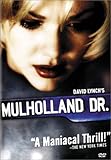
Amazon.co.uk Review
Pandora couldn’t resist opening the forbidden box containing all the delusions of mankind, and let’s just say in Mulholland Drive David Lynch indulges a similar impulse. Employing a familiar film noir atmosphere to unravel, as he coyly puts it, “a love story in the city of dreams”, Lynch establishes a foreboding but playful narrative in the film’s first half before subsuming all of Los Angeles and its corrupt ambitions into his voyeuristic universe of desire. Identities exchange, amnesia proliferates and nightmare visions are induced, but not before we’ve become enthralled by the film’s two main characters: the dazed and sullen femme fatale, Rita (Laura Elena Harring), and the pert blonde just-arrived from Ontario (played exquisitely by Naomi Watts) who decides to help Rita regain her memory. Triggered by a rapturous Spanish-language version of Roy Orbison’s “Crying”, Lynch’s best film since Blue Velvet splits glowingly into two equally compelling parts. –Fionn Meade
Copyright © 2026 Notcot All rights reserved. Theme by Laptop Geek. Site by I Want This Website. | Privacy Policy.